Buyer Trends In Golf Aquisitions
Press Release Written By LIPG
A Market Analysis Across Asset Types, Price Points, and Investor Profiles
Market Overview
The golf course acquisition market has undergone a structural transformation over the past five years. Family Offices, Private Equity platforms, and seasoned golf industry professionals have joined local operators as active buyers. They have created a market with greater capital depth, compressed cap rates at the quality tier, and transaction volume that rivals any period in the past two decades. Three forces are driving the influx of capital:
Sustained demand. U.S. rounds played reached approximately 530 million in 2023 and have held at elevated levels, supported by younger players entering through simulator venues and nine-hole social formats.
Commercial Real Estate displacement. Office vacancies remain structurally elevated, retail continues to contract, and multifamily cap rates offer little margin for error. Investors are rotating into golf as a replacement with stronger near-term operating fundamentals.
1031 efficiency. Golf courses qualify as like-kind real property under IRC Section 1031, enabling tax-deferred capital rotation from appreciated commercial assets directly into golf.
Asset Categories and Market Parameters
| Asset Type | Price Range | Primary Buyers | Cap Rate |
| Daily Fee | $1M – $8M | Operators, Family Offices, Golf Professionals | 7% – 10% |
| Semi-Private | $3M – $12M | Private Equity platforms, experienced operators | 6% – 9% |
| Private Club | $8M – $40M+ | Family Offices, PE groups, member buyouts | 4% – 7% |
| Golf Resort | $25M – $150M+ | Institutional PE, hospitality platforms, REITs | 5% – 8% |
Asset Category Highlights
Daily Fee — The Volume Market. The broadest buyer pool of any category. Golf professionals and regional operators pursue operational upside through dynamic pricing and management improvements. Family Offices frequently arrive via 1031 exchange, prioritizing cash flow and geographic desirability over pure yield. SBA 504 and 7(a) programs are the primary financing vehicle below $10 million.
Private Clubs — The Premium Tier. Family Offices and PE platforms have displaced traditional golf operators as the dominant acquirers. The thesis centers on membership restructuring — resetting initiation fees, adding corporate and non-resident categories, and investing in amenity upgrades — alongside recognition of the underlying land value as a floor on asset worth. Cap rate compression here has been the most pronounced of any category.
Golf Resorts — The Institutional Play. Resort acquisitions attract institutional PE, hospitality platforms, and REITs. The golf component anchors the brand, but lodging, food and beverage, events, and real estate revenues support complex capital structures. Branded properties with reservation infrastructure command premium pricing and more favorable financing terms. Typical deal size ranges from $25 million to well above $100 million.
Buyer Profiles
Family Offices. Motivated primarily by 1031 exchange efficiency and long-term capital preservation. Less constrained by fund return targets or exit timelines than PE buyers, which allows them to pay prices PE models cannot support and to commit to multi-year improvement horizons. Ownership of a recognized private club also carries social and reputational value within the networks where Family Office principals operate.
Private Equity. Executing geographic consolidation and platform-building strategies: acquire multiple courses, achieve management efficiencies, build a recognizable operating brand, then position the portfolio for institutional exit. Target gross returns of 15 to 25 percent over five to seven years, driven by operational improvement, dynamic pricing, and multiple expansion. Their presence has raised underwriting standards and accelerated cap rate compression at the quality tier.
Golf Industry Professionals. Bring operational depth that financial buyers cannot replicate, turf management, customer experience, and course operations expertise. Most active in the daily fee and semi-private categories, often financing through SBA programs with seller participation. A growing segment is aggregating two to five courses in regional markets, occupying the space between solo operators and national PE platforms.
Financing Structures
SBA 504 / 7(a). Primary option for acquisitions below $10M. 504 structures layer a CDC loan (40%), conventional first mortgage (50%), and 10% borrower equity at fixed rates.
Conventional CRE Debt. Regional and community banks with golf experience; LTV ratios of 55 to 70 percent; minimum 1.25x debt service coverage on stabilized income.
Life Company / CMBS. Competitive long-term fixed rates for stabilized private clubs and resorts with strong operating histories and larger loan balances.
Mezzanine / Preferred Equity. Used by PE platforms to fill the gap between senior debt and sponsor equity; priced in the 10 to 15 percent range.
Seller Financing. Common in daily fee and semi-private transactions; typically 5 to 8 percent, structured as a second lien or primary financing for smaller deals.
Market Outlook
Cap rates at the quality tier have compressed 100 to 200 basis points relative to pre-2020 levels. A two-tier market has emerged: assets with strong revenue trends and a credible improvement thesis attract deep, competitive buyer pools while secondary and tertiary market properties trade at multiples in line with operating fundamentals. The primary risk is participation durability; industry data through 2025 supports the thesis that demand is structural rather than cyclical. For sellers with well-positioned assets, the buyer pool is deeper, better capitalized, and more patient than at any point in a generation.
This analysis is prepared by Leisure Investment Properties Group for informational purposes only and does not constitute investment, legal, or tax advice. Consult qualified advisors before making acquisition decisions.
For more information, please visit www.leisurepropertiesgroup.com
List Your Golf Course,
Let Us Do The Rest!
Whether your golf course, golf MPC, or golf resort is worth $1M or $50M, we treat your property and business as if it is worth $100M. Our white-glove approach enables you to continue operating your business without interruptions from the headaches, negotiations, or stressful back-and-forth with investors. We are your partner throughout the entire process.
Related
Related News & Updates
$28,000,000 Loan
Capital Markets Announcement Leisure Investment Properties Group is pleased to announce the successful structuring and placement of a $28,000,000 loan for an exclusive private golf club in Florida. Congratulations to Gregory Lewis, Senior Managing Director of...
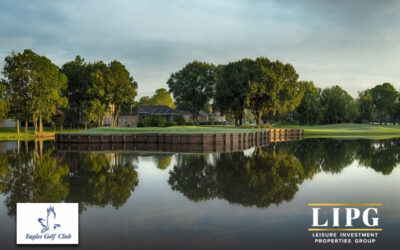
Sold – The Eagles Golf Club located in Odessa, Florida (Tampa MSA)
Steven Ekovich, Executive Managing Director & Partner of Leisure Investment Properties Group (LIPG) is pleased to announce the sale of The Eagles Golf Club located in Odessa, Florida. LIPG Senior Managing Director & Partner Rob Waldron was the Lead Golf...
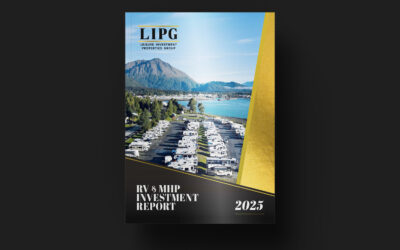
LIPG Releases 2025 RV & MHP Investment Report
Tampa, FL – Leisure Investment Properties Group (LIPG) is excited to announce the release of the 2025 RV & MHP Investment Report, delivering the latest sales data, market trends, and expert insights for industry professionals. This comprehensive report is an...
Contact
17539 Darby Lane | Tampa, FL | 33558
(813) 269-1144
